
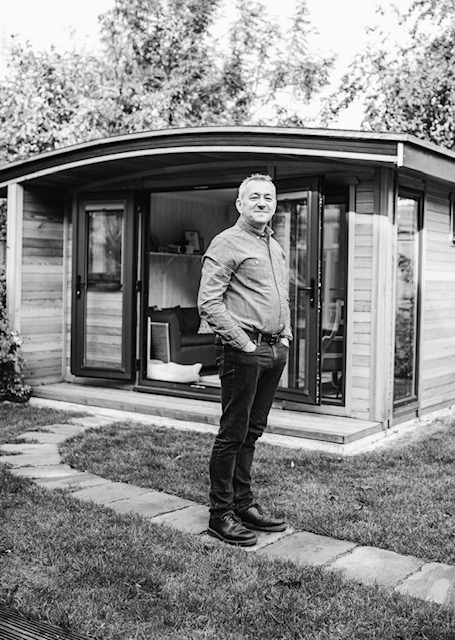
Advanced hypnotherapy in Swindon
The story behind Best Mind Therapy, what advanced training really means, and why the right approach begins with the person rather than the technique.
Read my story ↓The important skill is knowing what is appropriate—and when another form of care is needed.
What does “advanced hypnotherapy” actually mean?
When somebody searches for advanced hypnotherapy in Swindon, I suspect they are looking for more than an impressive-sounding technique. They want to know whether the person they speak to is properly trained, understands the problem and will treat them as an individual.
That is how I prefer to think about the word advanced. Not a mysterious trance, a secret script or a promise that something will work in a single session. For me it means continuing to learn, developing clinical judgement, recognising when to adapt a technique and—just as importantly—knowing when not to use one.
I am Gary Smith, the founder of Best Mind Therapy, a clinical hypnotherapy and psychotherapy practice based in North Swindon. I offer face-to-face appointments locally and online sessions across the UK when appropriate. Alongside seeing clients I teach trainee hypnotherapists and provide professional supervision. Those different responsibilities have shaped how I think about safe, thoughtful therapy.
This article began as a short introduction to me and my practice. I've expanded it to explain my route into therapy, the qualifications I hold, what a Solution Focused approach feels like, and how I decide whether hypnosis, another strategy or a different professional service may be the right next step.
I didn’t begin my career as a therapist
For more than three decades I worked in senior management in the retail and motor industries. The work taught me a great deal about listening, understanding what matters to people, problem-solving, setting realistic goals and helping someone move towards change.
There was plenty of pressure, responsibility and the need to make difficult decisions. What interested me most, though, was always the human side. A business plan is one thing; helping a person feel heard, encouraged and confident enough to do something different is quite another.
My interest in psychotherapy began much closer to home. Somebody I cared about was experiencing fears and sensory difficulties that affected everyday life. We looked for answers through familiar routes, but finding useful support was not straightforward. I became determined to learn more about anxiety, protective responses and the ways people might be supported.
That decision took me into formal training at the Clifton Practice and ultimately into establishing Best Mind Therapy. What started as a wish to help one person became a complete change of direction in my professional life.
I'm also a father of three. That experience reinforced something I care about strongly: children and young people deserve to feel listened to when they are worried, frightened or overwhelmed. Being a parent does not make somebody a specialist in child mental health, of course, but it has influenced the sensitivity I bring to conversations about family life and the importance of age-appropriate support.
Throughout all of this, one principle has stayed with me: I want people to understand what we are doing together and to feel that they have an active say in their care.
Training matters—but so does what we do with it
Professional qualifications are useful information for anyone choosing a therapist. They tell you something about a person's education and commitment to development, but they do not guarantee a specific result or mean every condition falls within their scope.
DSFH
Diploma in Solution Focused Hypnotherapy, forming part of my original clinical foundation.
HPD
Hypnotherapy Practitioner Diploma, reflecting further assessed practitioner-level education.
AHD
Advanced Hypnotherapy Diploma; advanced study is valuable when used with appropriate judgement and clinical boundaries.
DCH-Sup
A clinical hypnotherapy supervision qualification supporting my work with other practitioners.
My further learning includes NLP training, Neo-Ericksonian hypnosis training and additional study related to therapeutic communication and CBT-informed ideas. These are different forms of professional development; they should not be interpreted as interchangeable qualifications or as evidence that I deliver a full specialist CBT programme.
Professional registration: I list registrations with the National Council for Hypnotherapy (NCH), the Association for Solution Focused Hypnotherapy (AfSFH) and the Complementary & Natural Healthcare Council (CNHC). Registration, education, experience and suitability for an individual client's needs should each be considered on their own merits.
It is worth asking any therapist: what training is relevant to my particular concern? How is progress reviewed? Who provides supervision? What happens if the approach does not seem to be helping? I welcome those questions.
What Solution Focused Hypnotherapy looks like in practice
The word solution focused is sometimes misunderstood as simply telling somebody to think positively. It is much more useful—and more respectful—than that.
We acknowledge the difficulties that have brought somebody to therapy, but do not assume we must analyse every painful event in detail before they can make progress. We explore what the person would like to be different, what already helps, what strengths and resources they can draw upon, and what a manageable next step might look like.
Understand
We discuss the concern, what matters to you, relevant circumstances and whether my approach is appropriate.
Notice strengths
We pay attention to exceptions, resources, achievements and situations where coping is already easier.
Move at your pace
We agree practical goals, review changes and adapt together. Hypnosis is used only with consent and when suitable.
During a session I may draw on collaborative conversation, guided relaxation, clinical hypnosis, mental rehearsal and selected NLP- or CBT-informed strategies. Each has its own history and evidence base. I will not suggest that combining methods automatically makes therapy more effective.
Importantly, you do not have to tell me every detail of a distressing experience to be taken seriously. At the same time, if someone would benefit from a particular evidence-based specialist treatment, focusing only on the future must never become a reason to ignore that need.
What happens during clinical hypnosis?
Stage hypnosis has given many people the impression that the hypnotist somehow takes control of another person's mind. Clinical hypnosis is very different. It is an agreed process involving attention, suggestion and the client's active participation.
Someone might notice a feeling of relaxation, focused absorption, vivid imagery or a change in how they experience a suggestion. People describe hypnosis differently; relaxation is common but is not required for every hypnotic procedure. You can speak, ask questions or request that we stop.
The Royal College of Psychiatrists describes hypnosis and hypnotherapy in terms of focused attention and therapeutic suggestion. It is not sleep, mind control or a method of reliably recovering hidden memories.
There are many inductions and ways to work with attention. You can explore the differences in my separate article What is a hypnotic induction?. My responsibility is not to choose the most dramatic induction; it is to consider what is appropriate, comfortable and clinically useful for the individual.
When might I draw on different approaches?
I prefer to think of therapeutic techniques as tools rather than badges of expertise. A good therapist knows several ways of working but does not assume every client needs all of them.
| Approach | What it may involve | Key consideration |
|---|---|---|
| Solution Focused conversation | Exploring preferred outcomes, exceptions, resources, confidence and small achievable changes. | Goals are chosen collaboratively, not imposed by the therapist. |
| Clinical hypnosis | Focused attention, imagery, therapeutic suggestions and sometimes relaxation. | Evidence depends on the condition and intervention; suitability and consent matter. |
| Neo-Ericksonian influences | Flexible language, utilisation, metaphor and responding to the client's experience. | A style of practice, not a guarantee of a particular clinical outcome. |
| NLP-informed strategies | Imagery, reframing and, where appropriate, Rewind-style work. | The evidence is more limited than for established specialist treatments in several conditions. |
| CBT-informed elements | Practical reflection on patterns of thought, behaviour, coping and helpful actions. | These elements are not the same as providing a full specialist CBT or ERP programme. |
| Referral or coordinated care | Discussing NHS services, medical review or appropriately qualified specialists. | Sometimes the most helpful decision is not to provide hypnotherapy. |
I keep current professional guidance in mind. In some circumstances hypnotherapy may be used as a supportive or adjunctive intervention, while in others a better-studied treatment should take priority. I would rather explain that openly than offer unrealistic assurances.
Different concerns call for different conversations
People contact me for many reasons. Sometimes they have one particular fear. Sometimes anxiety has started affecting work, family life or everyday confidence. And sometimes the person cannot yet put their experience into neat words.
When worry takes up too much room
We can explore triggers, patterns, helpful resources, sleep, day-to-day functioning and practical changes. Where symptoms are severe or persistent, clinical assessment and other treatment options may be important.
When avoidance starts making decisions
We consider what the fear is preventing, how the person would prefer to respond, and whether appropriate supportive methods or specialist evidence-based treatment best meet their needs.
When self-belief becomes difficult
Collaborative goals, realistic mental rehearsal and recognition of existing strengths can be useful areas of focus.
When rest becomes a struggle
We can discuss sleep-related anxiety and patterns that interfere with rest, while recognising the role of medical assessment and established insomnia interventions where appropriate.
When the past still feels present
Careful assessment and consent come first. We discuss safety, stabilisation and evidence-based trauma treatment options; hypnosis is not a proven replacement for these.
When support must fit their age
The approach should match developmental stage, communication preferences, safeguarding needs and family circumstances, with specialist input where indicated.
For information about particular concerns, visit Best Mind Therapy's service pages or contact me to discuss your circumstances. No single list can tell us whether therapy will be suitable for you personally.
When a different treatment should come first
Responsible therapists should understand the strengths of their own approach and where the evidence is less clear. More qualifications or a more sophisticated-sounding technique cannot replace that judgement.
For example, NICE recommends trauma-focused CBT and EMDR for many adults with PTSD, depending on the clinical presentation and circumstances. My work may include trauma-informed conversation and selected NLP-informed techniques, but I would not present these as equivalent substitutes for those specialist treatments.
Similarly, CBT including exposure and response prevention (ERP) is an established option for obsessive-compulsive disorder. I do not deliver specialist ERP. A client with OCD should be told about that option, even when we are exploring other support needs.
The UK Advertising Standards Authority's hypnotherapy guidance also reminds practitioners to avoid unsupported treatment claims. I do not promise a guaranteed result, a fixed number of sessions or that everybody can be helped by hypnosis.
A helpful question to ask any therapist: “If this doesn't seem to be the right treatment for me, will you say so?” You deserve a clear answer.
What happens when you enquire?
The first conversation is an opportunity to decide together whether working with me makes sense. There is no pressure to arrive knowing exactly what to say.
Tell me what brings you here
We discuss your concerns, the impact on day-to-day life and what you hope might be different. You can ask anything that would help you feel informed.
Consider suitability and options
I explain how I work, what is and is not within my training, and where another form of care might be more suitable.
Agree a starting point
If you choose to proceed, we set collaborative goals and agree how progress will be reviewed. You retain the right to decline any technique.
Review rather than assume
We notice changes, discuss what is helpful and adapt, pause or finish when appropriate. The aim is not to keep somebody attending unnecessarily.
I offer a free initial consultation. Fees and appointment arrangements are published on the fees page, and you can also contact the practice if you would prefer to ask questions first.
Why teaching other therapists matters to my practice
Alongside clinical appointments I work as a senior lecturer in hypnotherapy training and offer professional supervision. Those roles are not separate from the way I think about clients—they encourage me to keep learning, questioning assumptions and explaining my reasoning.
Teaching can make us examine familiar ideas more closely. Why are we choosing a particular induction? What evidence supports the claims we make? What would we do if a client became distressed? When should we seek supervision or refer? I want students to be able to answer those questions before they regard any method as an advanced technique.
Supervision offers a structured setting for reflection on clinical decisions, boundaries, uncertainty and practitioner development. It is not a substitute for a client's own consent or specialist referral, but it is an important part of responsible practice.
If you're considering becoming a practitioner yourself, you can explore hypnotherapy training in Swindon. This blog, however, is primarily about my therapy work rather than a course advertisement.
In person in Wiltshire—or online around the UK
Best Mind Therapy is based in North Swindon, with appointments by arrangement. The practice welcomes enquiries from Swindon and surrounding areas including Cirencester, Marlborough, Chippenham and neighbouring towns. Online work may be possible across the UK, subject to suitability.
My therapy clinic is on Northbourne Road, Swindon SN25 4YE. I don't operate separate treatment rooms in all the nearby towns mentioned on the website; these are communities from which people may travel or enquire online. See the clinic area on Google Maps.
If you would prefer to attend from home, we can discuss whether an online appointment fits your needs, privacy and access to a suitable space. If an emergency, complex medical or safeguarding issue is involved, a local healthcare service may be more appropriate.
For contact details, appointments and accessibility questions, visit the contact page.
Small changes matter. So does the relationship.
I still think about the question that led me into therapy in the first place: how can we help someone feel they have more possibilities than the problem currently allows them to see?
There isn't one answer that fits everyone. For one person the next step might be having the courage to ask for support; for another it might be discovering that an old fear no longer has to decide everything. Others will need specialist treatment, practical support or more time than expected.
My aim is to offer a professional, welcoming space where we can explore those possibilities together. I want you to feel involved, informed and free to decide whether the approach is right for you.
That, to me, is a far more meaningful way to think about advanced hypnotherapy in Swindon than simply counting techniques or collecting certificates.
Questions you may want to ask
What is advanced hypnotherapy?
There is no single universally defined treatment called advanced hypnotherapy. The phrase often refers to additional training or a broader repertoire of methods. What matters is the practitioner’s competence, consent, clinical judgement and suitability for your particular needs.
Does an advanced hypnotherapist get better results?
Not necessarily. Advanced training can support professional development, but qualifications alone do not establish better outcomes or guarantee that a particular intervention will help.
What qualifications does Gary Smith hold?
Gary lists the Diploma in Solution Focused Hypnotherapy (DSFH), Hypnotherapy Practitioner Diploma (HPD), Advanced Hypnotherapy Diploma (AHD) and a clinical hypnotherapy supervision qualification (DCH-Sup), alongside further training and relevant professional registrations.
Will I lose control during hypnosis?
No. Clinical hypnosis is an agreed, collaborative process. You remain able to communicate, ask questions and request that a session stops. Experiences vary from person to person.
Do I have to relive upsetting memories?
No. You should never be pressured to describe or relive traumatic events as a condition of receiving support. Where specialist trauma treatment is indicated, established options should be discussed.
Does Gary offer specialist CBT or ERP for OCD?
Gary uses appropriate CBT-informed elements but does not provide a specialist CBT/ERP programme. CBT including ERP is an established treatment option for OCD, and a specialist referral may be the most appropriate choice.
Can hypnotherapy help with anxiety and phobias?
Hypnotherapy may be considered for some anxiety-related difficulties, but the strength of evidence differs by concern. A discussion of suitable evidence-based alternatives and individual circumstances is important.
How many sessions will I need?
There is no reliable number for everybody. The approach, goals and progress are reviewed together, and there should be no pressure to continue for longer than is appropriate.
Can I have hypnotherapy online?
Online appointments are offered throughout the UK where suitable. Privacy, safety, reliable access and the nature of the difficulty help determine whether remote work makes sense.
Where is Best Mind Therapy based?
The therapy practice is based on Northbourne Road, North Swindon, Wiltshire, SN25 4YE. Visits are by arrangement. Contact the practice before travelling.
Is Gary also a hypnotherapy lecturer and supervisor?
Yes. Gary combines clinical work with senior lecturing and professional supervision, and explains the limits of each role when discussing qualifications and client care.
Professional references
The personal story and qualifications are drawn from my original article and current Best Mind Therapy information. The external references explain hypnosis, professional claims and treatment choices; they do not establish that one practitioner or diploma produces better outcomes.
- Royal College of Psychiatrists — Hypnosis and hypnotherapy
- Cambridge University Press — Hypnotherapy and therapeutic suggestion
- NICE guideline NG116 — PTSD recommendations
- NICE guideline CG31 — OCD recommendations
- ASA / CAP — Health: Hypnotherapy
- NCH — Hypnotherapy FAQ
- Best Mind Therapy — About Gary
- Best Mind Therapy — Clinical services
Perhaps we could begin with a conversation.
There is no expectation that you will know exactly what to say. We can talk about your concerns, what you hope might change and whether I might be the right person to help.
Arrange a free consultation · Fees and appointments · Contact Gary
Gary Smith · Best Mind Therapy · North Swindon, Wiltshire · UK-wide online appointments where suitable.